The Power of Vunerability
Brown, Brené. The Power of Vulnerability: Teachings on Authenticity, Connection, and Courage. Louisville, CO: Sounds True, 2012.
In The Power of Vulnerability, Brené Brown argues that vulnerability is not a weakness but the foundation of meaningful human connection, creativity, and belonging. Drawing from years of research on shame, courage, and empathy, Brown explains that authentic relationships require a willingness to be seen, take emotional risks, and embrace imperfection. She suggests that moments of openness and shared experience allow people to build trust and foster genuine community, making vulnerability an essential part of both personal growth and collective wellbeing.
My work has always been about creating opportunities for people to connect, and Brené Brown's ideas helped me better understand why those moments matter. I make functional ceramics and installations that invite people to gather around a table, share food, and spend time with one another. Those interactions require a certain amount of vulnerability—whether it's starting a conversation with a stranger, sharing a meal, or simply slowing down enough to be present. Brown's work reminds me that these everyday moments can be meaningful because they ask us to be open and engaged with the people around us. That perspective has strengthened my belief that ceramics are more than functional objects; they can become tools for bringing people together. Rather than focusing only on the finished artwork, my practice centers on the experiences and relationships that develop around it. I hope my work creates spaces where people feel comfortable, welcomed, and willing to connect, even if only for the length of a shared meal or conversation.
A cooks Tour
Bourdain, Anthony. A Cook's Tour: Global Adventures in Extreme Cuisines. New York: Bloomsbury, 2001.
In A Cook's Tour, Anthony Bourdain travels across the world in search of meaningful food experiences, using meals as a way to understand people, cultures, and traditions. Rather than treating food as entertainment or luxury, Bourdain presents it as a universal language that creates opportunities for conversation, trust, and human connection. He demonstrates that sharing a meal is often the fastest way to cross cultural boundaries, emphasizing that food carries stories, memories, and values beyond what is served on the plate.
This book strongly influences my artistic practice because it reinforces my belief that eating together is a meaningful social act worthy of artistic exploration. My ceramic installations and functional pottery are designed to encourage gathering, conversation, and moments of slowing down in an increasingly fast-paced world. Like Bourdain, I am interested less in the food itself than in the relationships that form around the table. His respect for everyday rituals surrounding meals has encouraged me to think of ceramics not simply as functional objects, but as vessels that facilitate connection between people. A Cook's Tour supports my investigation into how shared experiences can become a form of participatory art, where the act of gathering is just as important as the objects that make it possible. Through my work, I aim to create spaces where people can experience the same sense of community, curiosity, and hospitality that Bourdain found around tables across the world.

Relational Aestheics
Bourriaud, Nicolas. Relational Aesthetics. Dijon: Les Presses du Réel, 1998.
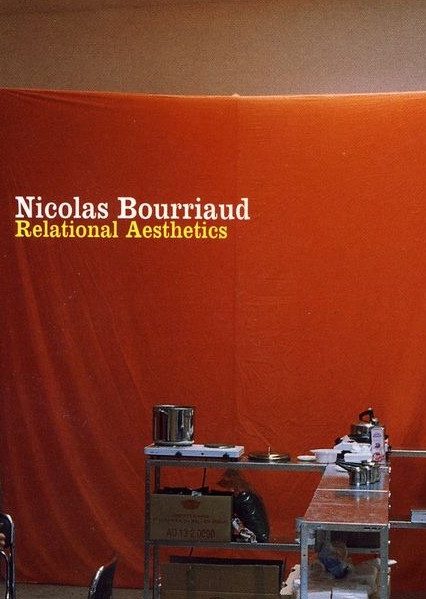
In Relational Aesthetics, Nicolas Bourriaud argues that contemporary art can function as a space for human interaction rather than existing solely as an object to be viewed. He introduces the concept of “relational art,” in which artists create situations that encourage participation, conversation, and social exchange. Bourriaud suggests that these shared experiences can foster meaningful connections between people and challenge traditional understandings of art.
This source is particularly relevant to my work because my artistic practice focuses on creating opportunities for connection through shared experiences. Whether through installations centered on meals, gathering spaces, or participatory works such as my floating coffee table installation, I am interested in how art can bring people together and encourage interaction. Bourriaud’s framework helps contextualize my interest in hospitality, community, and the social relationships that emerge through everyday moments of gathering.
Social Objects
Social Objects: Essays, Interviews, Projects and Interventions on Socially Engaged Craft. Socially Engaged Craft Collective. CreateSpace Independent Publishing Platform, 2017.
Annotation:
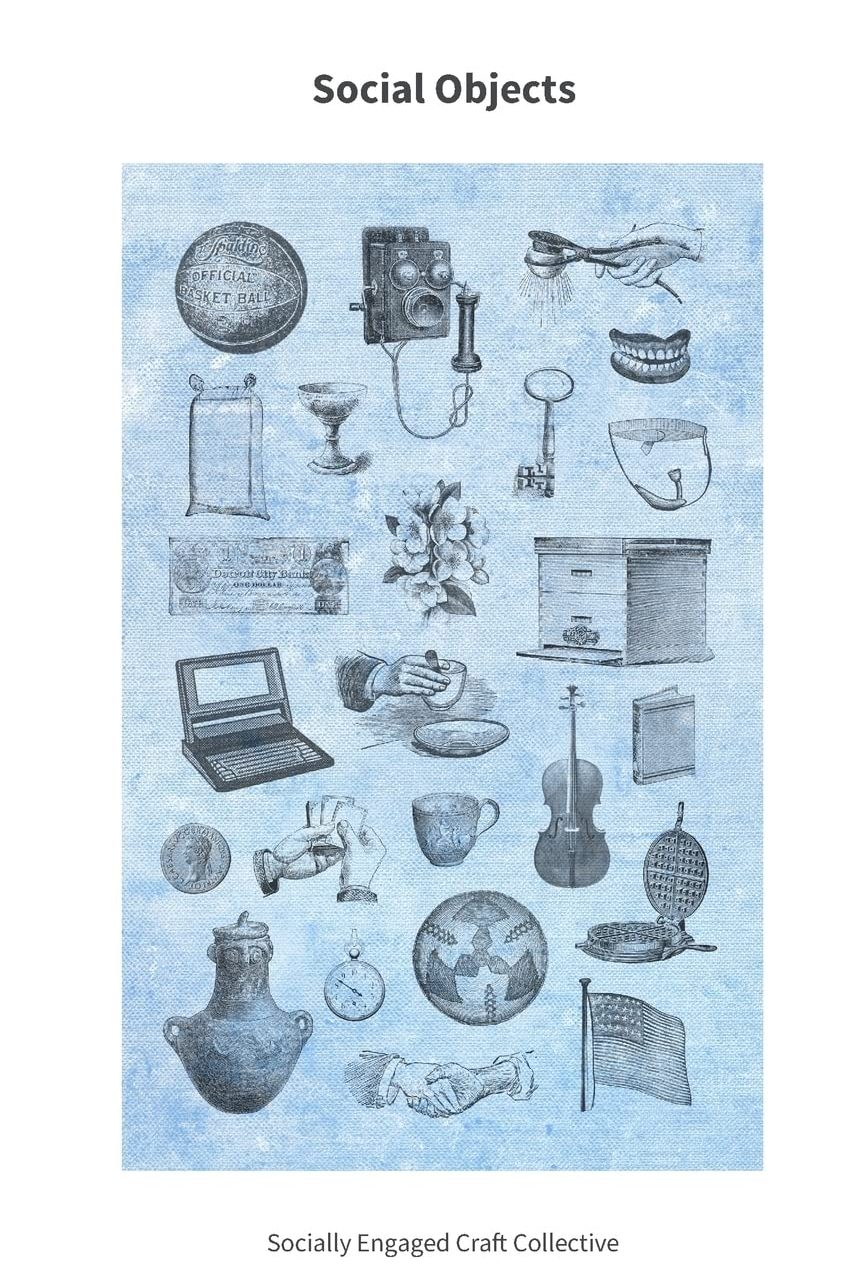
Social Objects examines how craft objects can function as catalysts for social interaction, participation, and community building. Through essays, interviews, and project documentation, members of the Socially Engaged Craft Collective explore the ways objects carry meaning beyond their material form. The publication argues that craft objects are not simply things to be viewed or used, but can also create relationships, encourage dialogue, and foster collective experiences. Many of the projects discussed focus on participation, collaboration, meal sharing, and other forms of social engagement rooted in the traditions of craft and ceramics. The authors emphasize the “relational qualities” of objects and their ability to generate meaningful encounters between people.
This text has been especially influential to my artistic practice because it provides language for ideas that are central to my work. While I create ceramic objects, my primary goal is often to facilitate connection between people. Whether through shared meals, participatory installations, note card exchanges, or social gathering spaces, I am interested in how objects can encourage conversation and create moments of belonging. The concept of the social object helps me understand my ceramic work not as an end in itself, but as a tool for bringing people together. This perspective has influenced projects such as my floating coffee table installation and my thesis work surrounding communal dining experiences. Social Objects reinforces my belief that craft can extend beyond aesthetics and utility to become a vehicle for connection, community, and meaningful social exchange. The publication has helped me situate my practice within a broader field of socially engaged art and craft, where the relationships formed around an object can be just as important as the object itself.
Living as Form
Thompson, Nate, ed. Living as Form. New York: Creative Time Books, 2012.
Annotation:
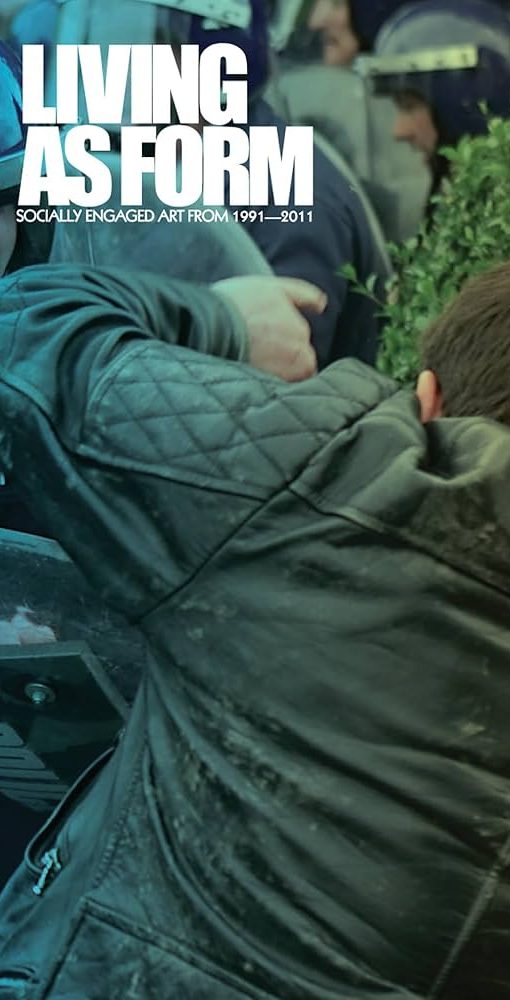
Living as Form documents a wide range of socially engaged art projects from around the world and argues that art can exist through social interaction, community participation, and everyday experiences rather than solely through traditional art objects. Edited by Nato Thompson, the book examines projects that address issues such as community building, public space, education, activism, and collective action. The artists featured in the publication often prioritize relationships and participation over permanent objects, emphasizing the ways art can create new forms of social engagement and public dialogue. The book has become a foundational text in the study of socially engaged art because it broadens the definition of artistic practice to include human interactions, collaborative processes, and lived experiences.
Living as Form has been particularly influential to my artistic practice because it validates the idea that meaningful artistic experiences can emerge through gathering, participation, and connection. While my work is rooted in ceramics, I am often more interested in the interactions that occur around an object than in the object itself. My thesis project explored the moments of connection that happen when people share a meal, and many of my installations are designed to encourage conversation and community. Reading Living as Form helped me understand these projects as part of a larger tradition of socially engaged art, where relationships become the artwork. The book has encouraged me to think about ceramics not only as a material practice but also as a means of creating social experiences. Its emphasis on participation, hospitality, and community resonates deeply with my interest in fostering moments of belonging through shared meals, public installations, and other forms of social gathering.
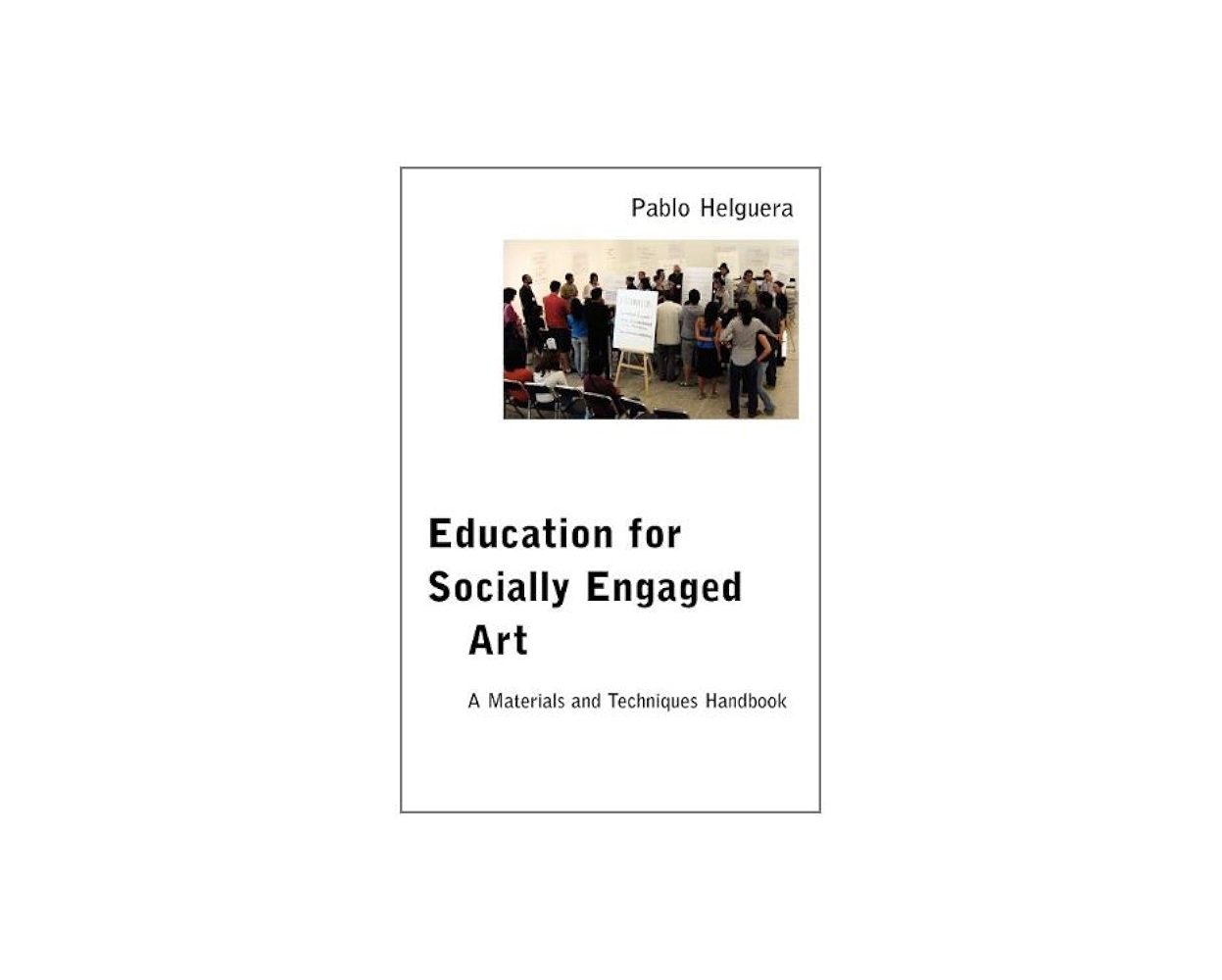
Education for Socially Engaged Art
Helguera, Pablo. Education for Socially Engaged Art: A Materials and Techniques Handbook. New York: Jorge Pinto Books, 2011.
In Education for Socially Engaged Art, Pablo Helguera examines art practices that prioritize social interaction, participation, and community engagement. Helguera argues that socially engaged art requires artists to think beyond traditional art-making and consider roles such as educator, facilitator, and collaborator. The book provides practical guidance for creating projects that involve dialogue, collective experiences, and public participation while addressing the ethical responsibilities that come with working directly with communities.
This source is relevant to my work because my practice centers on creating spaces where people can gather, interact, and reflect on their relationships with one another. Through installations inspired by shared meals, public gathering spaces, and participatory projects, I am interested in how art can facilitate meaningful human connection. Helguera’s discussion of the artist as a facilitator helps frame my role in creating environments that encourage conversation and collaboration, rather than simply presenting objects for viewers to observe. His emphasis on participation and social exchange supports my exploration of connection as both an artistic medium and a central goal of my practice.
Roger Caillois’ theory of The natural Fantastic
Caillois, Roger. “The Natural Fantastic.” In The Edge of Surrealism: A Roger Caillois Reader, edited by Claudine Frank, Duke University Press, 2003, pp. 142–144.
In “The Natural Fantastic,” Roger Caillois explores how wonder and mystery emerge from the natural world rather than from purely imagined or supernatural sources. He argues that unusual patterns, forms, and phenomena found in nature can evoke a sense of the fantastic by disrupting ordinary perception and encouraging deeper reflection. Caillois suggests that the boundary between reality and imagination is often blurred through encounters with the unexpected aspects of the natural environment.
This source is relevant to my work because I often draw inspiration from everyday experiences and environments, transforming familiar objects and spaces into opportunities for connection and contemplation. Caillois’s discussion of wonder arising from ordinary reality relates to my interest in elevating common social rituals—such as sharing a meal, gathering around a table, or encountering an unexpected installation in a public space. His ideas help frame how seemingly simple moments can become meaningful experiences that encourage viewers to reconsider their relationships with one another and with the spaces they inhabit.
The Anthony Bourdain Reader
Bourdain, Anthony. The Anthony Bourdain Reader. Edited by Laurie Woolever. New York: Ecco, 2024.
The Anthony Bourdain Reader is a collection of essays, interviews, and excerpts from Anthony Bourdain’s writing that explores food, travel, culture, and human connection. Throughout the collection, Bourdain emphasizes the importance of gathering around a table, sharing meals, and engaging with people from different backgrounds. He presents food not simply as sustenance, but as a means of building relationships, fostering empathy, and understanding diverse experiences. His writing highlights the social and cultural significance of everyday acts of hospitality and communal dining.
This source is particularly relevant to my work because my artistic practice is rooted in the moments of connection that occur when people gather together. Much like Bourdain’s belief that sharing a meal can bridge differences and create meaningful relationships, my installations explore how food, conversation, and communal spaces can function as artistic experiences. His emphasis on slowing down, engaging with others, and finding value in ordinary moments supports my interest in creating work that encourages connection, hospitality, and a greater appreciation for everyday social interactions.

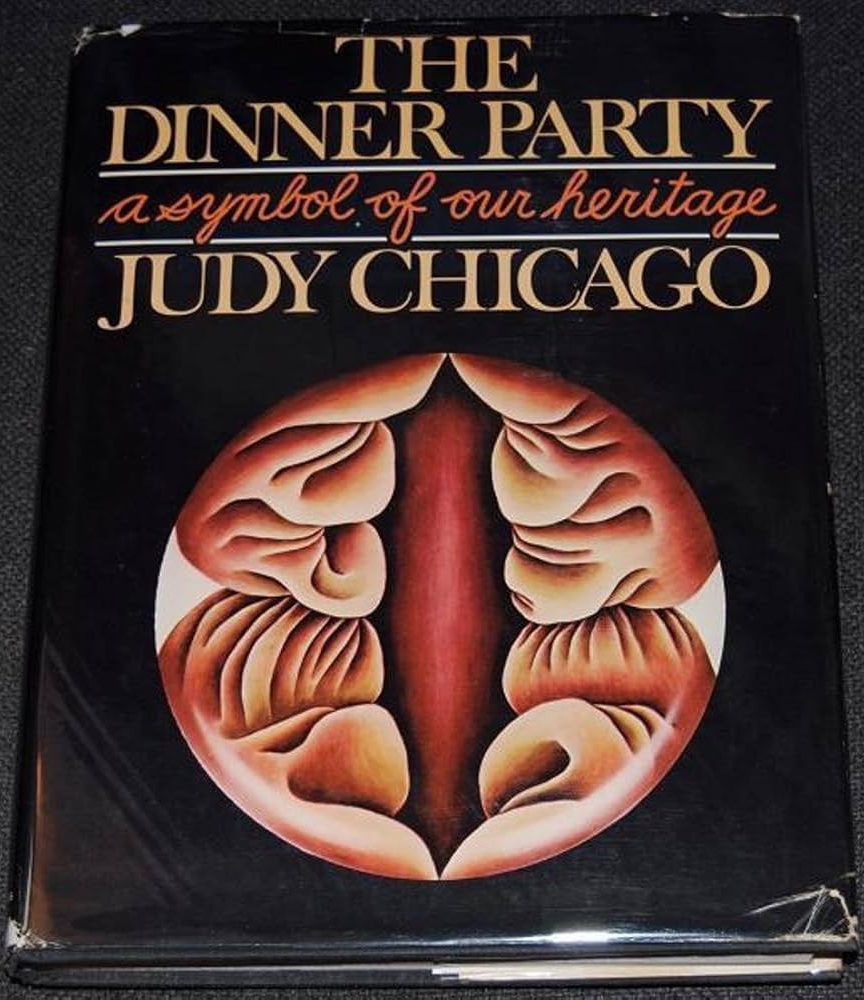
The Dinner Party: a Symbol of our heritage
Chicago, Judy. The Dinner Party. 1974–1979. Permanent installation at the Brooklyn Museum.
Annotation:
Judy Chicago’s The Dinner Party is a seminal work of feminist art that honors the achievements and histories of women who have often been excluded from traditional historical narratives. The installation features a triangular banquet table with thirty-nine elaborate place settings dedicated to notable women from history and mythology, while the surrounding floor contains the names of hundreds more. By incorporating ceramics, embroidery, and other forms of craft traditionally associated with women’s labor, Chicago challenges distinctions between fine art and domestic practices. The work transforms the act of gathering around a table into a symbol of community, remembrance, and collective heritage.
The Dinner Party has been particularly influential to my own artistic practice because it demonstrates how a shared meal can function as more than a social activity—it can become a meaningful artistic experience. Much of my work explores moments of connection between people, often through food, conversation, and gathering. Chicago’s installation shows how the table can serve as a space for storytelling, inclusion, and recognition. Her use of ceramics to facilitate these connections resonates strongly with my own interest in clay as a medium that brings people together. While my work focuses on creating contemporary moments of joy and connection, The Dinner Party provides an important historical example of how communal dining can be used as an artistic strategy to build relationships and foster a sense of belonging.
Live in your head, when attitude becomes form
Annotation:
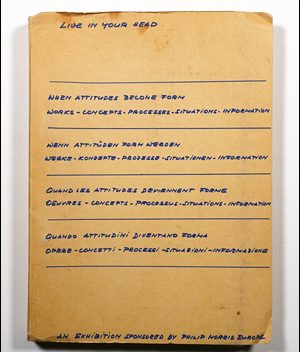
Live in Your Head: When Attitudes Become Form was a groundbreaking exhibition curated by Harald Szeemann that brought together artists associated with Conceptual Art, Process Art, Arte Povera, and other emerging movements of the late 1960s. Rather than focusing on finished objects, the exhibition emphasized artistic processes, actions, ideas, and experiences. Many of the works were created on-site, challenging traditional expectations of what an artwork could be and shifting attention from the final product to the relationships, actions, and attitudes that produced it. The exhibition marked a significant moment in contemporary art history by expanding the role of the artist, the curator, and the exhibition space itself.
This exhibition has influenced my artistic practice by encouraging me to think beyond the physical object and consider the experience surrounding the work. While I primarily work in ceramics, my projects often center on creating opportunities for interaction and connection rather than simply presenting objects for display. Works such as my floating coffee table installation or participatory projects involving food and gathering reflect a similar interest in the social experience generated by an artwork. When Attitudes Become Form demonstrates that the value of an artwork can lie in the conversations, encounters, and relationships it produces. This perspective has helped me view my ceramic works and installations not only as objects, but as catalysts for meaningful human connection.